
Technical Guide Materials Science 2026
Fumed Silica
Pyrogenic SiO₂ — From Flame to Formulation
Everything you need to know about fumed silica: how it’s made, why it works, and where it’s used. Built for engineers, formulators, and procurement professionals.
CAS 112945-52-5 Formula SiO₂ BET 50–400 m²/g Updated Mar 2026
SiCl₄ + 2H₂ + O₂ → SiO₂ + 4HCl Core reaction — flame hydrolysis at >1500 °C
Contents
Quick Specs Purity>99.8% Particle7–40 nm Density20–60 g/L Surface50–400 m²/g
What Is Fumed Silica?
A synthetic, ultra-pure amorphous silicon dioxide made by burning SiCl₄ in a hydrogen flame at over 1500 °C.
Fumed silica — also called pyrogenic silica — was first commercialized in 1944 by Degussa (now Evonik) under the AEROSIL® brand. Nanoscale primary particles, extremely high surface area, and zero porosity make it one of the most versatile functional additives in materials science.
Trade names: HJSIL® (Minmetals East) · SEMISIL® (Semitech) · HMMAT® Fumed Matting Agent
Appearance
Looks like fresh snow — ultra-light, fluffy white powder. Bulk density can be as low as 20 g/L. Becomes airborne with the slightest air current.
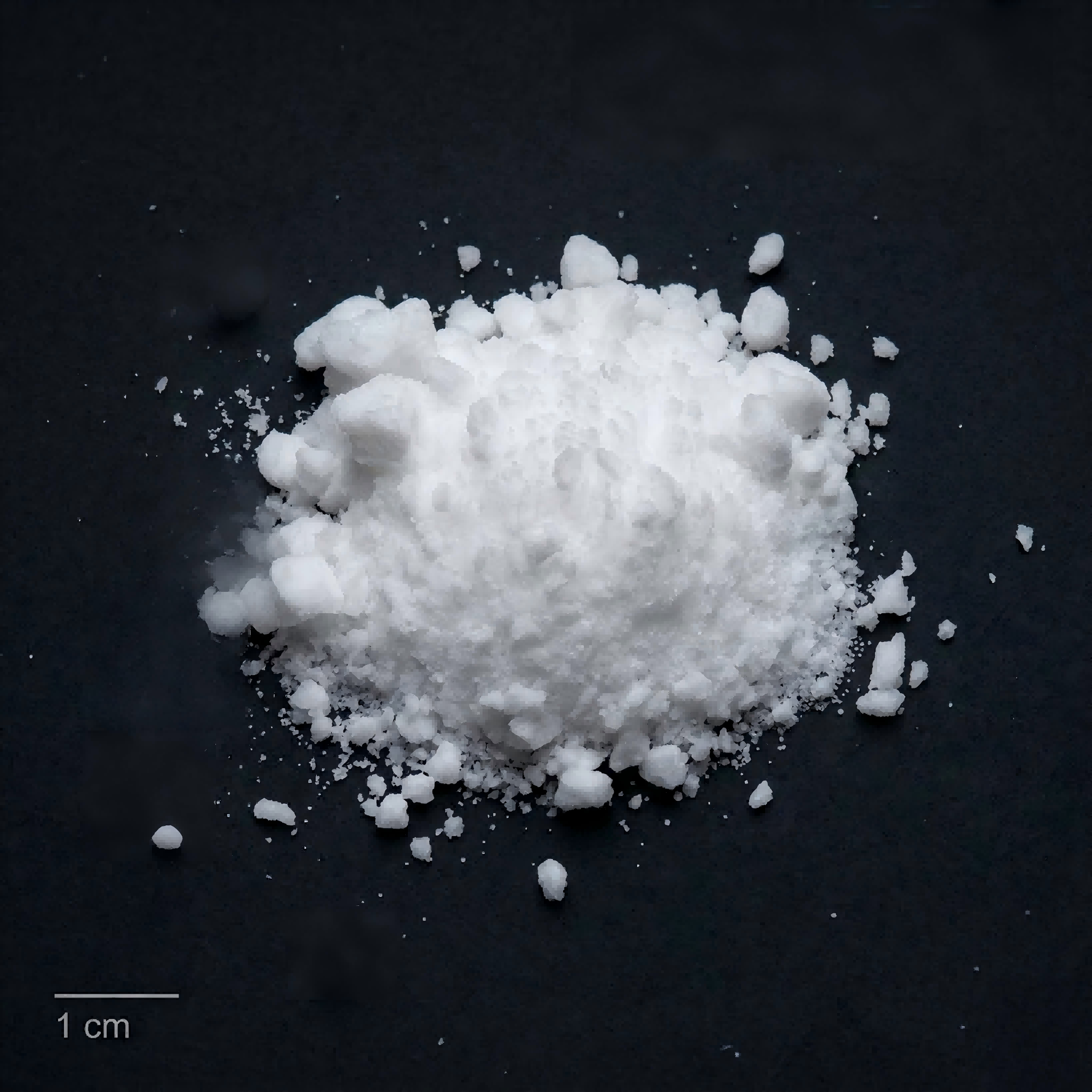
Fig 1 — Pure fumed silica powder.
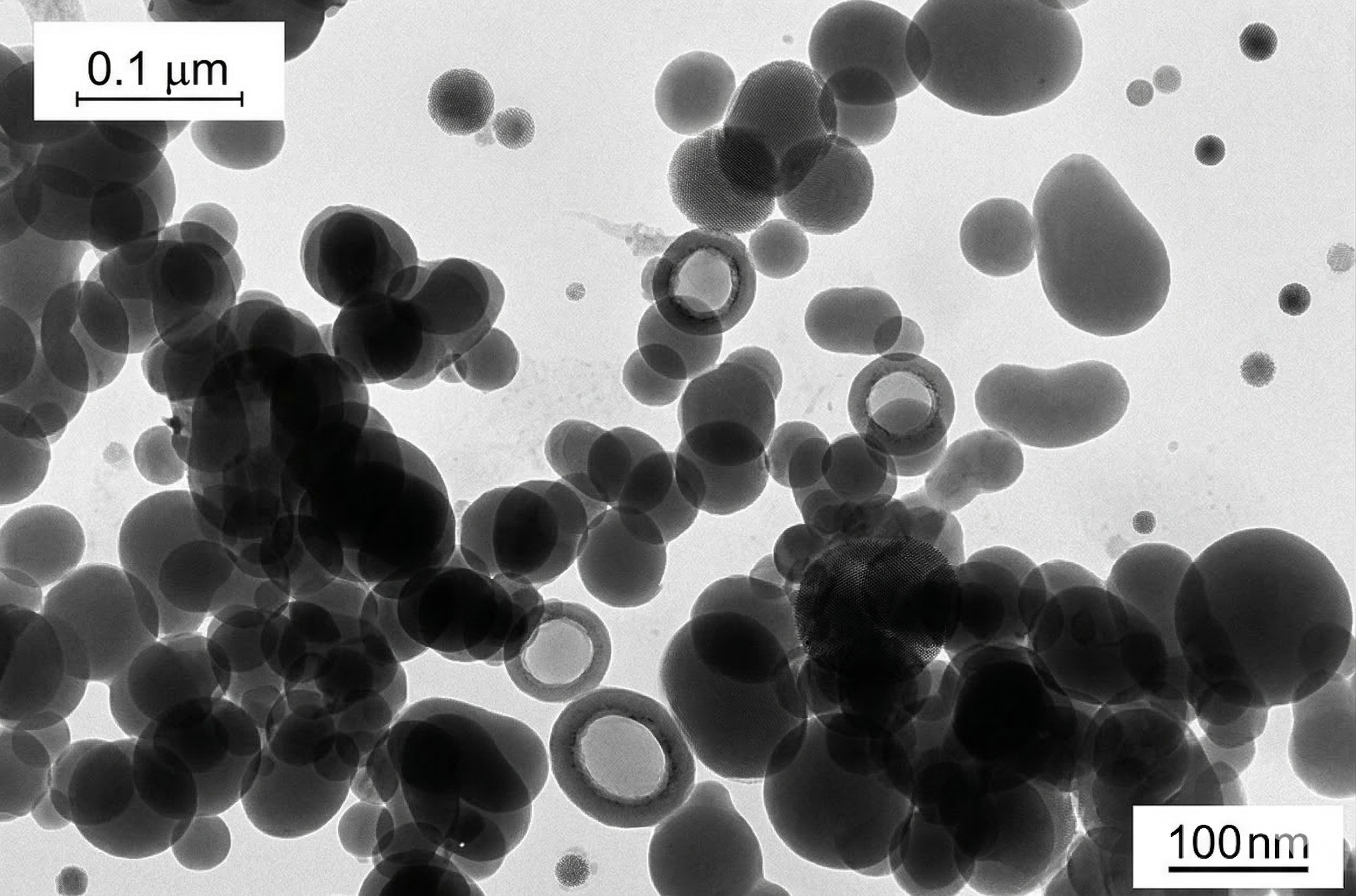
Fig 2 — Texture detail, 130 m²/g grade.
How Fumed Silica Is Made
Vaporized SiCl₄ enters a hydrogen–oxygen flame (>1500 °C) inside a burner reactor. The SiO₂ formed is cooled, separated by cyclone filters, deacidified, and packaged. The HCl byproduct is recovered for reuse.
Particle Formation — 4 Stages in Milliseconds
01 Proto-particles <1 nm SiO₂ molecules nucleate in the flame core 02 Primary Particles 7–40 nm Dense, non-porous spheres form 03 Aggregates 100–500 nm Molten primaries fuse into permanent chains 04 Agglomerates 1–200 µm Aggregates bond loosely via H-bonds 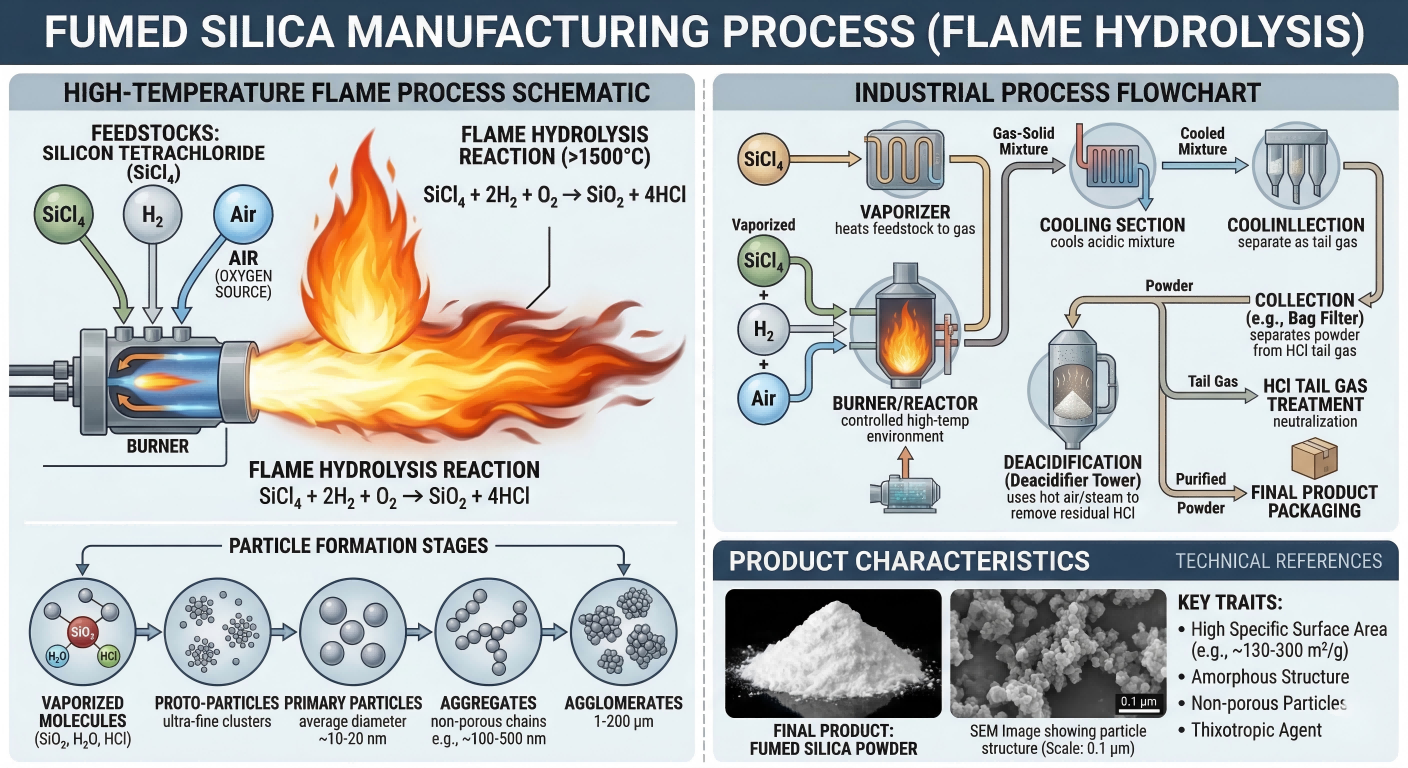
Fig 3 — Flame hydrolysis: from SiCl₄ feed to agglomerate product.
Process levers: Flame temperature, SiCl₄ feed rate, residence time, and H₂/O₂ ratio control particle size and surface area.
Three-Tier Nano-Morphology
Every performance property traces back to this three-level structure. Understanding it is the key to selecting the right grade.
| Level | Size | Bond | Reversible? |
|---|---|---|---|
| Primary Particle | 7–40 nm | Covalent (bulk SiO₂) | No |
| Aggregate | 100–500 nm | Sinter bridges (Si–O–Si) | No |
| Agglomerate | 1–200 µm | Hydrogen bonds (Si–OH⋯OH–Si) | Yes |
Aggregates are the functional unit — permanent chains that give fumed silica its thickening and reinforcing power. Agglomerates break apart under shear and re-form at rest — the origin of thixotropy.
Key Properties
>99.8%SiO₂ purity 7–40 nmPrimary particle 50–400m²/g BET surface 2.2g/cm³ true density
| Property | Value |
|---|---|
| Bulk density (untamped) | 20–60 g/L |
| pH (4% in water) | 3.7–4.5 |
| Loss on drying (105 °C, 2h) | <1.5 wt% |
| Loss on ignition (1000 °C, 2h) | <2.0 wt% |
| Silanol density | ~2–3 OH/nm² |
| Refractive index | 1.46 |
Surface Chemistry
Surface silanol groups (Si–OH) drive hydrophilicity, hydrogen-bond networking, and polymer interaction. Hydrophobic grades replace –OH with –CH₃ for non-polar systems.
Applications
Rheology Control
Thickening, thixotropy, anti-sag in coatings, adhesives, sealants, inks, UPE resins.
Silicone Reinforcement
Tensile strength, tear resistance, hardness in HTV/RTV silicone rubber.
Powder Flow Aid
0.1–1% loading coats particles, reduces cohesion. Pharma, food, toner.
Anti-Settling Agent
Weak gel suspends pigments in storage. Re-liquefies under stirring.
Thermal Insulation
VIP core material. Achieves <0.005 W/(m·K) thermal conductivity.
Gel Electrolytes
Thickens electrolytes in lead-acid and Li-ion batteries. Prevents leakage.
Fumed vs. Precipitated Silica
| Parameter | Fumed | Precipitated |
|---|---|---|
| Process | Gas-phase flame hydrolysis | Wet chemical precipitation |
| SiO₂ purity | >99.8% | ~85–98% |
| Particle structure | Non-porous spheres | Porous, irregular |
| Moisture / LOI | <1.5% / <2% | ~5% / ~5–8% |
| Silanol density | ~2–3 OH/nm² | ~4–6 OH/nm² |
| Thickening efficiency | High (lower dose) | Moderate |
| Transparency | Excellent | Lower |
| Cost | Higher | Lower |
Selection rule: Need max purity, transparency, efficiency? → Fumed. Cost-sensitive, opacity OK? → Precipitated.
FAQ
+Is fumed silica the same as silica fume?
No. Fumed silica = high-purity synthetic product (flame hydrolysis). Silica fume = byproduct of silicon smelting, used in concrete. Entirely different materials.
+Is it safe to handle?
Amorphous, not a carcinogen. But ultra-fine particles can irritate lungs/eyes. Use dust masks, safety glasses, enclosed systems. Follow the SDS.
+What BET grade should I use?
Silicone: 150–200 m²/g. Coatings: 150–300 m²/g. Flow aid: 200+ m²/g. Higher surface = stronger effect, harder to disperse.
+Can it disperse in water?
Hydrophilic grades: yes — forms thixotropic gels above ~3–5 wt%. Hydrophobic grades: SEMISIL R272, R110, R202, R620.
Data from publicly available manufacturer datasheets. For product selection and SDS, consult Semisil
Updated March 2026 · Advanced Materials Technical Review