
DMC (Dimethyl Cyclic Siloxane Mixture, D3–D7 Cyclic Blend, CAS 69430-24-6): The Dominant Feedstock for Silicone Polymer Manufacture
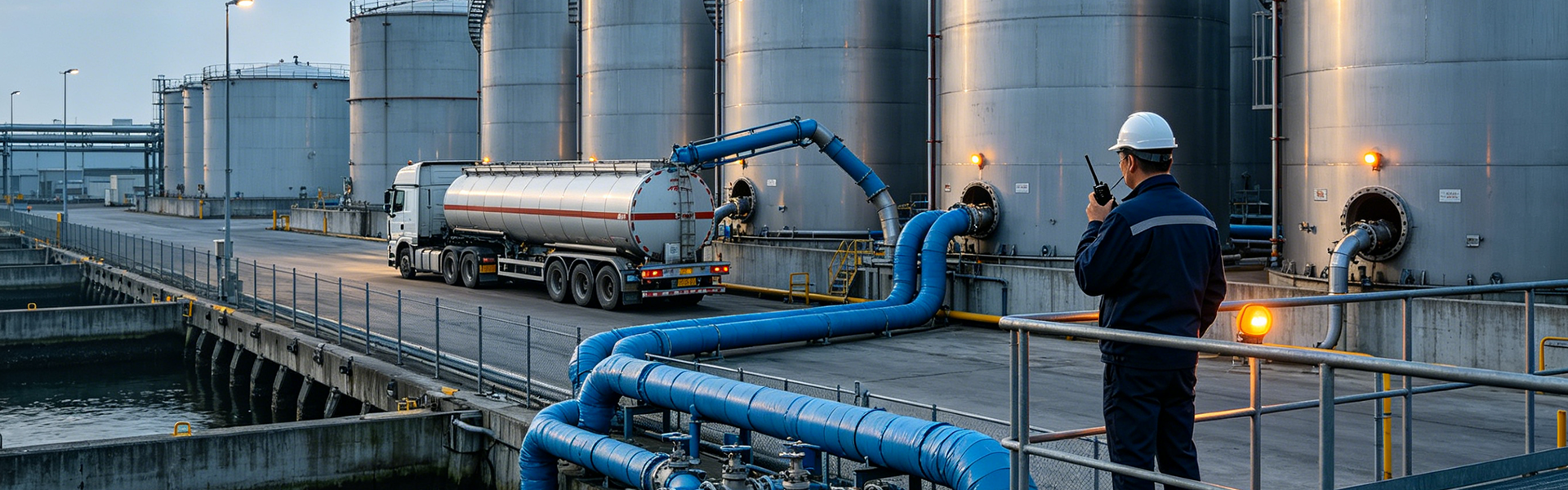
SEMITECH DMC is the dimethyl cyclic siloxane mixture — a D3–D7 cyclic blend dominated by D4 (octamethylcyclotetrasiloxane) at 50–70% — used as the primary feedstock for ring-opening polymerisation of all standard silicone fluids, gums, and rubbers. Lower-cost alternative to fractionated D4 for downstream polymerisation processes that produce equilibrated PDMS chain-length distributions. 200 kg HDPE drum or 25 t ISO-tank for bulk silicone polymer manufacture.
Contents
| 69430-24-6 | 50–70% D4 | 25 t |
|---|---|---|
| CAS number | Cyclic distribution | ISO-tank quantity |
Chemistry & Specifications
D3–D7 cyclic siloxane mixture; clear colourless mobile liquid; ~25% lower cost than fractionated D4.
DMC — dimethyl cyclic siloxane mixture, CAS 69430-24-6 — is the unfractionated cyclic siloxane blend obtained from the hydrolysis of dimethyldichlorosilane in the Müller-Rochow direct synthesis pathway. The mixture composition typically runs: D3 (hexamethylcyclotrisiloxane) at 1–5%, D4 (octamethylcyclotetrasiloxane) at 50–70%, D5 (decamethylcyclopentasiloxane) at 20–35%, D6 at 3–8%, D7+ at 1–3%. SEMITECH supplies DMC at ≥98% total cyclic siloxane content (linear oligomer impurity ≤2%), water content ≤50 ppm, acidity (as HCl) ≤5 ppm, and APHA colour ≤30. The compound is a clear colourless mobile liquid (viscosity 2.5–3.5 cP at 25°C) with a faint silicone odour, density 0.95 g/cm³ at 20°C, boiling range 134–250°C at atmospheric pressure (D3 134°C → D7 250°C).
DMC is the dominant feedstock for silicone polymer manufacture in China and globally — the cost differential to fractionated D4 is typically 25–35% on a per-kg basis, which is significant in commodity silicone fluid and gum production where raw-material cost dominates. Downstream polymerisation processes — ring-opening polymerisation (ROP) for silicone fluid and gum, anionic equilibration for high-MW gum, and acid- or base-catalysed equilibration for blended fluids — all give equivalent chain-length distributions whether starting from DMC or fractionated D4 because the polymerisation reaches thermodynamic equilibrium that is determined by the temperature and catalyst, not the cyclic feedstock distribution. Use fractionated D4 only when the application demands tight feedstock-purity control (cosmetic grade, pharmaceutical grade, optical-clarity silicone).
Polymerisation Pathways: ROP and Equilibration to PDMS Polymer
KOH or H₂SO₄ catalyst opens cyclic ring; equilibrates chain length to thermodynamic distribution; produces PDMS fluid/gum.
DMC undergoes ring-opening polymerisation (ROP) under acid (sulphuric acid, triflic acid) or base (KOH, CsOH, tetramethylammonium hydroxide) catalysis at 80–150°C reactor temperature. The catalyst initiates ring-opening at a cyclic siloxane Si-O bond, then propagates chain growth through reaction with additional cyclic monomer. The polymerisation is reversible and reaches a thermodynamic equilibrium that is essentially independent of the starting cyclic distribution — running the reaction long enough at constant temperature gives the same chain-length distribution starting from pure D4, pure D5, or DMC mixture.
- 50–500 cP fluid — methyl silicone fluid for cosmetic, lubricant, mould-release; chain length 30–200 Si-O units
- 1,000–60,000 cP fluid — silicone hydraulic, dielectric fluid, defoamer base; chain length 200–1000 units
- >100,000 cP gum — silicone rubber base polymer, HCR/HTV gum; chain length 1000–10,000 units
- OH-terminated PDMS — RTV silicone base polymer, sealant compound base; produced by water-quenched ROP
After polymerisation reaches target viscosity, the catalyst is neutralised (acid quench for base catalysis; base quench for acid catalysis) and the polymer is stripped under vacuum at 200–250°C to remove residual cyclic siloxane (back-reaction to cyclics is significant; commercial silicone fluid typically retains 1–10% residual cyclics depending on stripping intensity). The stripped cyclic fraction is recovered and recycled into the next polymerisation batch — DMC manufacturing therefore operates as a closed-loop process where cyclic monomer cycles between feedstock and polymer multiple times.
Applications & Procurement Context
Silicone fluid manufacture (largest), HCR/HTV gum, RTV base polymer, silicone resin, defoamer base.
Silicone fluid manufacture is the largest single application — methyl silicone fluid (5–60,000 cP grades), modified silicone fluids (amino-, hydroxy-, vinyl-modified), and emulsifiable silicone fluids for cosmetic and personal-care formulations. DMC is metered into a continuously-stirred reactor, polymerised under acid or base catalysis, neutralised, and stripped to give the target viscosity grade. HCR/HTV silicone rubber gum uses DMC at 95–98% on total monomer, polymerised to >100,000 cP gum and supplied to compounders for downstream filler-mixing and peroxide-cure compounding.
RTV silicone base polymer (α,ω-dihydroxy-PDMS, 50–500 cP) for one-component and two-component RTV silicone sealant uses DMC as feedstock with water co-monomer to introduce the OH-terminated chain ends required for condensation cure. Silicone resin manufacture for high-temperature coatings and electronic encapsulation uses DMC as the difunctional D-unit source in polymerisation with monofunctional M-units (HMDS) and tetrafunctional Q-units (TEOS) to give MQ resins and DT silicone resins. Defoamer base fluid uses DMC-derived medium-viscosity PDMS as the active component in MeFoam-S, MeFoam-MO, and MeFoam-FG defoamer compounds.
Procurement context: DMC is a commodity bulk chemical with global production capacity of 600,000+ MT/year (China dominates at 70%+). Spot pricing is volatile, tied to silicon metal upstream cost and silicone fluid downstream demand. SEMITECH operates as a trader-aggregator drawing from 4–6 Chinese DMC producers (Tangshan Sanyou, Shandong Dongyue, Hubei Xingfa, Jiangxi Hongbo) — providing supply security against single-source disruption. Q1 2026 ex-Zhejiang spot CNY 13,000–18,000/MT (USD 1.8–2.5/kg) FOB — the lowest price point in the silicone polymer value chain.
Procurement, Storage and Quality Control
CoA per shipment; 200 kg drum or 25 t ISO-tank; 24-month shelf life; non-flammable Class III combustible.
SEMITECH issues a CoA on every batch with: total cyclic siloxane content (GC, target ≥98%), individual cyclic distribution (GC, D3/D4/D5/D6/D7 quantitative breakdown), water content (Karl Fischer, target ≤50 ppm), acidity as HCl (potentiometric titration, target ≤5 ppm), APHA colour (target ≤30), density at 20°C, and viscosity at 25°C. Standard packing 200 kg HDPE-lined steel drums for trial and small-scale users; 25 t ISO-tank containers for bulk silicone polymer manufacturers. MOQ 200 kg per order; 25 t ISO-tank for bulk supply contracts. Lead time 1–2 weeks ex-Zhejiang to Asia ports for stocked grade, 4–6 weeks to Europe and North America for ISO-tank shipment.
Storage: stable under ambient conditions; classified as combustible Class III (flash point 49°C for D4-rich blend; depending on D3 content can shift to Class II at higher D3 fraction). Recommended: store sealed below 30°C in original packaging; protect from atmospheric moisture (water reacts with cyclic siloxane at high temperature, producing trace silanol that affects polymerisation kinetics). Shelf life 24 months sealed for drum packaging; ISO-tank deliveries are typically consumed within 60 days of receipt at silicone polymer plants. Regulatory note — D4 / D5 ECHA designation: D4 (CAS 556-67-2) is on the EU REACH SVHC candidate list as a vPvB (very persistent, very bioaccumulative) substance; D5 (CAS 541-02-6) similarly classified. The DMC mixture inherits these designations on the basis of D4/D5 content. Industrial use of DMC as feedstock for silicone polymer manufacture is permitted, but downstream silicone products must comply with EU REACH residual-cyclic-siloxane limits (D4 ≤0.1% in personal-care leave-on products from 2027; further restrictions under review). SDS in EU/GHS format issued with every shipment with full ECHA classification.
DMC is the dominant silicone polymer feedstock — D3-D7 cyclic mixture at ~25% lower cost than fractionated D4. Used in 95%+ of commodity silicone fluid, HCR/HTV gum, RTV base polymer, and silicone resin manufacture. Bulk supply via 25 t ISO-tank, drum packaging for trial. EU REACH D4/D5 SVHC classification — industrial feedstock use permitted with downstream compliance.
DMC Specification Sheet
SEMITECH stocked grade; CoA per batch with full cyclic distribution.
| Property | Specification | Test Method |
|---|---|---|
| Chemical name | Dimethyl cyclic siloxane mixture (D3-D7) | — |
| CAS number | 69430-24-6 | — |
| Total cyclic content | ≥98% | Gas chromatography |
| D3 content | 1–5% | GC |
| D4 content | 50–70% | GC |
| D5 content | 20–35% | GC |
| D6 content | 3–8% | GC |
| D7+ content | 1–3% | GC |
| Linear oligomer impurity | ≤2% | GC |
| Water content | ≤50 ppm | Karl Fischer |
| Acidity (as HCl) | ≤5 ppm | Potentiometric titration |
| APHA colour | ≤30 | ASTM D1209 |
| Density (20°C) | 0.95 g/cm³ | ASTM D1475 |
| Viscosity (25°C) | 2.5–3.5 cP | Brookfield |
| Flash point | 49°C (closed cup, D4-rich blend) | ASTM D93 |
| Boiling range | 134–250°C (atmospheric) | — |
| EU REACH classification | SVHC (D4/D5 vPvB) — industrial-feedstock use permitted | — |
| Packaging | 200 kg HDPE-lined steel drum / 25 t ISO-tank | — |
| Shelf life | 24 months sealed below 30°C | — |
FAQ
+Should I order DMC or fractionated D4 for my silicone fluid manufacturing?
Order DMC for: (1) commodity silicone fluid grades (5–60,000 cP) where the polymerisation reaches thermodynamic equilibrium that is independent of starting cyclic distribution; (2) HCR/HTV silicone rubber gum where high-MW polymerisation also equilibrates; (3) RTV base polymer for sealant compounds where downstream OH-end-functionalisation is more important than starting feedstock purity; (4) cost-optimised manufacturing where 25–35% feedstock cost reduction matters more than polymer batch-to-batch consistency at the parts-per-million purity level. Order fractionated D4 for: (1) cosmetic-grade silicone fluid where regulatory residual-cyclic limits apply (D4 must be controlled at ≤0.1% in cosmetic leave-on products under EU REACH 2027 timeline); (2) pharmaceutical-grade silicone (USP-NF dimethicone monograph requires controlled cyclic content); (3) optical-clarity silicone for LED encapsulation where trace impurity affects photonic properties.
+How does the EU REACH D4/D5 SVHC designation affect downstream silicone product approvals?
EU REACH lists D4 (CAS 556-67-2) and D5 (CAS 541-02-6) as Substances of Very High Concern (SVHC) under the vPvB (very persistent, very bioaccumulative) criterion. Implications for downstream silicone products: (1) personal-care leave-on products in the EU must report D4 content above 0.1% by weight in the finished product (current threshold; tightening to lower limits under review for 2027–2030); (2) wash-off products (shampoo, body wash) similarly subject to declining D5 limits; (3) industrial-use silicone (sealants, lubricants, electronic encapsulation) is largely exempt from the cosmetic limits but still requires REACH registration and SDS disclosure of D4/D5 content. SEMITECH SDS provides full quantitative disclosure of D4/D5 in DMC shipments; downstream silicone product manufacturers must implement vacuum-stripping post-polymerisation to reduce residual cyclic siloxane below applicable limits. Consult REACH expertise for product-specific compliance pathway.
+What is the typical loss rate from DMC to finished silicone fluid in a commercial manufacturing line?
Commercial silicone polymer manufacturing achieves 92–96% mass conversion from DMC feedstock to specified-viscosity silicone fluid product. The 4–8% mass loss breaks down as: (1) residual cyclic siloxane retained in the polymer at typical 1–10% level after vacuum stripping (the closed-loop cyclic-recovery system recycles this stripped cyclic fraction back to next-batch feedstock, reducing net loss to 2–4%); (2) water-of-reaction loss in OH-terminated PDMS production (1–2%); (3) thermal decomposition during high-temperature stripping at 200–250°C (0.5–1%); (4) handling and venting losses (0.5–1%). Modern Chinese silicone polymer plants with closed-loop cyclic recovery systems typically operate at 96%+ conversion efficiency. Older plants without closed-loop recovery operate at 88–92% conversion — significant production-cost difference at scale.
