
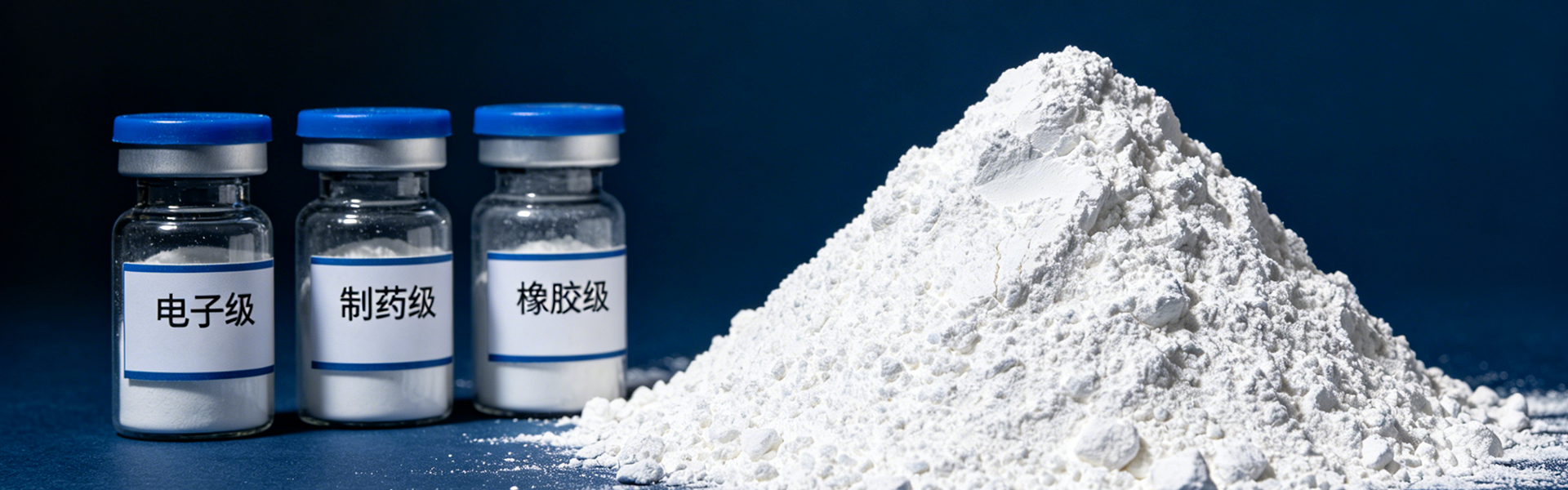
Zinc Oxide (ZnO)
CAS 1314-13-2 — Indirect-process and active zinc oxide at ≥99.7% purity. Electronic, pharmaceutical (USP/EP), rubber-vulcanization, and coating grades from a verified Chinese manufacturer with RoHS and REACH compliance.
Technical Grade Selection Matrix
Choose by purity class and target application — heavy-metal limits and particle size are the two most common procurement gates.
| Grade | ZnO Purity | D50 | Pb / Cd (ppm) | Primary Use Case |
|---|---|---|---|---|
| Electronic Grade | ≥ 99.95% | 0.3 – 0.8 μm | Pb ≤ 5 / Cd ≤ 3 | MLV, MOV varistors, ferrite, SAW filters |
| Pharmaceutical Grade | ≥ 99.0% | 0.5 – 5 μm | Pb ≤ 50 / Cd ≤ 5 | USP / EP / JP — topical ointment, sunscreen, calamine |
| Rubber Grade | ≥ 99.7% | 0.3 – 0.6 μm | Pb ≤ 30 / Cd ≤ 10 | Tire, conveyor belt, footwear — vulcanization activator |
| Coating Grade | ≥ 99.7% | 0.3 – 1 μm | Pb ≤ 50 / Cd ≤ 10 | Anti-corrosion primer, UV-shielding, anti-fungal exterior |
Industrial Applications
Vulcanization Activator
ZnO + stearic acid forms the activator complex for sulfur cure. Used in 3–5 phr loading across tires, footwear, and industrial rubber.
Typical Dosage
3 – 5 phr
Active vs Standard
Active ZnO (BET 30–60 m²/g) cuts dosage 30 – 50%.
SemiconductorElectronics
Varistor & Electronic Ceramics
Multi-layer varistor (MLV), MOV surge arrestor, and ferrite cores require ≥99.95% purity with controlled D50 to ensure consistent breakdown voltage.
Purity Required
≥ 99.95% ZnO
Heavy Metals
Pb ≤ 5 / Cd ≤ 3 ppm
USP/EPPharma
Topical Pharmaceutical
Calamine lotion, diaper rash cream, sunscreen, anti-fungal ointment. Pharmacopoeia compliance (USP/EP/JP) and microbial limit testing required.
Standards
USP / EP / JP
Microbial
TAMC ≤ 10² CFU/g
UV / Anti-CorrCoatings
Anti-Corrosion & UV Shielding
In exterior coatings, ZnO absorbs UV-A/UV-B and inhibits microbial growth. In zinc-rich primers, it functions as a sacrificial pigment alongside zinc dust.
Loading
2 – 8% w/w (UV) · 5 – 15% (primer)
Surface Coating
Silane or stearic acid optional
▶Show full content (2 sections)
Production & Packaging
Process
Zinc metal is vaporized at ~907 °C and combusted with air to form ZnO particles, which are cooled, collected, and milled. The Indirect process produces lower heavy metals than the Direct (Wet) process and is required for electronic, pharma, and high-purity coating grades.
Packaging Options
Standard
25 kg PE-laminated kraft bag, palletized 40 bags / 1 MT
Bulk
500 kg / 1 MT FIBC jumbo bag with inner liner
North America Option
50 lb or 100 lb multi-wall bag on request
Shelf Life
24 months in original sealed packaging, dry storage < 30 °C
Lead Time & Logistics
Standard Order
10 – 14 days ex-works Shanghai
20′ Container
~20 MT (palletized) / ~24 MT (loose)
40′ HQ Container
~24 MT (palletized) / ~28 MT (loose)
Documents
CoA, MSDS, REACH SVHC statement, RoHS statement on every shipment
Frequently Asked Questions
+Indirect process vs Direct process — which grades use which?
Indirect (American / French) process vaporizes pure zinc metal and produces low-impurity ZnO suitable for all grades above 99.7%. Direct (Wet) process roasts zinc ore and yields higher residual Fe / Pb — only acceptable for low-end industrial grades. SEMITECH supplies indirect-process material across all four published grades.
+Active ZnO vs standard — when is the price premium justified?
Active ZnO (precipitated, BET 30 – 60 m²/g vs standard 5 – 10 m²/g) cuts vulcanization activator dosage 30 – 50%, improves cure efficiency, and reduces blooming in light-colored rubber. Worth specifying when total ZnO line cost dominates the formula or when color stability matters.
+How do you verify heavy metals (Pb, Cd, As) on incoming lots?
Each lot is tested by ICP-MS for Pb, Cd, As, Fe, Mn, Cu, Cr, and Ni. CoA is issued lot-by-lot. For electronic and pharmaceutical buyers, we additionally provide independent third-party lab verification (SGS or Intertek) on request.
+What is the typical MOQ?
For rubber and coating grades — 1 MT (40 bags). For electronic and pharma grades — 500 kg. Sample quantities (1 – 5 kg) are available for qualification, freight prepaid by buyer.
+Can ZnO be substituted with ZnCO₃ (zinc carbonate)?
Only in some rubber compounds — ZnCO₃ decomposes to ZnO during cure but releases CO₂, which can cause porosity in thick sections. In coatings, electronics, and pharma, the two are not interchangeable.