
SEMITECH
Silicone Curing Catalysts

DCBP Peroxide

DCBP — bis(2,4-dichlorobenzoyl) peroxide, CAS 133-14-2 — is an aromatic diacyl peroxide formed from the reaction of 2,4-dichlorobenzoyl chloride with sodium peroxide. Molecular formula C₁₄H₆Cl₄O₄, molecular weight 380.0

Products›Silicone Materials›Curing Catalysts Hub›DCBP

DCBP (Bis(2,4-Dichlorobenzoyl) Peroxide, CAS 133-14-2): The Low-Temperature Peroxide for HTV Silicone Cable Jackets and Extruded Profiles

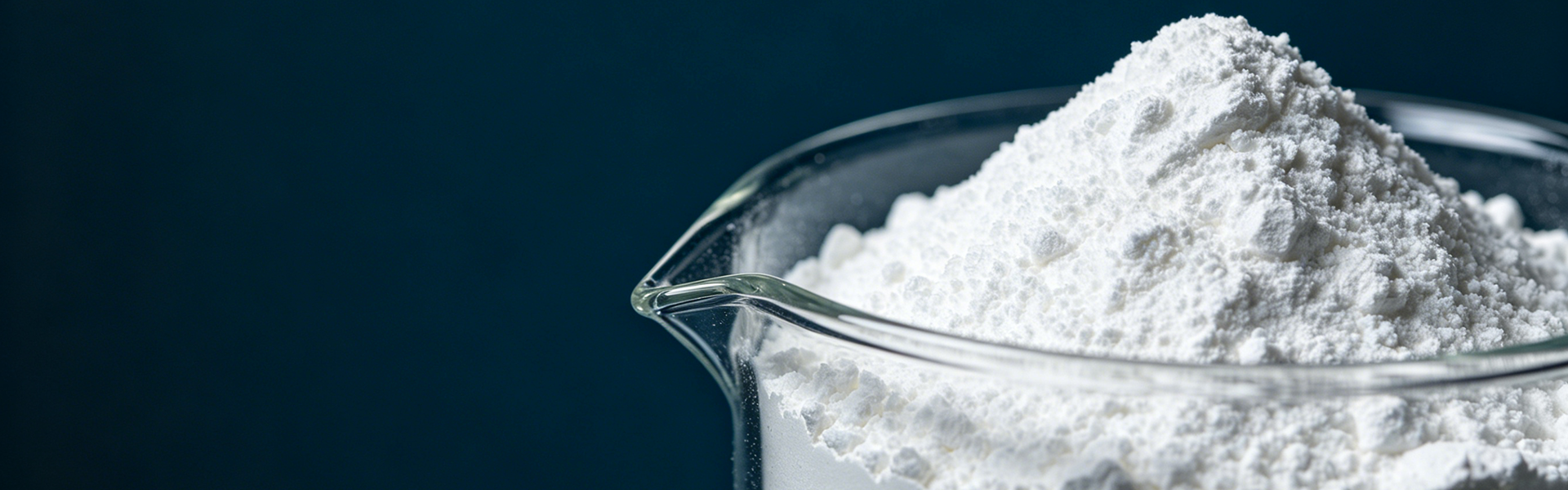
SEMITECH stocks DCBP as 50% paste in silicone fluid — the lowest-decomposition-temperature aromatic diacyl peroxide widely specified for HTV silicone rubber, with a 1-minute half-life at 124°C. Standard cure agent for thin-section extruded profiles (cable jackets, gaskets, tubing) where short cycles in continuous hot-air vulcanisation tunnels demand fast onset. 25 kg pail packaging, refrigerated transport for tropical destinations.

Contents

133-14-250%124°C
CAS numberIn silicone fluidt½ = 1 min

Chemistry & Specifications

Aromatic diacyl peroxide; supplied as 50% paste in PDMS fluid; t₁/₂ = 1 min at 124°C; light-pink solid.

DCBP — bis(2,4-dichlorobenzoyl) peroxide, CAS 133-14-2 — is an aromatic diacyl peroxide formed from the reaction of 2,4-dichlorobenzoyl chloride with sodium peroxide. Molecular formula C₁₄H₆Cl₄O₄, molecular weight 380.0 g/mol. The pure compound is a fine white-to-pale-pink crystalline solid with melting point 137–139°C (with decomposition). For commercial silicone use, DCBP is shipped as a 50 wt% paste dispersion in non-reactive silicone fluid (typically methyl-silicone fluid 100–500 cP) to suppress decomposition risk during shipping and to provide uniform mill-mix dispersion in HTV silicone gum.

The defining technical specification of DCBP is its decomposition kinetics: 1-minute half-life at 124°C, 10-minute half-life at 95°C, 1-hour half-life at 75°C. This makes DCBP the lowest-temperature commercially-used silicone peroxide — far below DCP (dicumyl peroxide, t½ 1 min at 175°C) and DBPH (2,5-dimethyl-2,5-di(tert-butylperoxy)hexane, t½ 1 min at 196°C). The trade-off is shelf-life: DCBP paste must be stored below 25°C in cool conditions; tropical-climate transport requires refrigerated shipping above 5°C ambient. SEMITECH issues a Self-Accelerating Decomposition Temperature (SADT) certificate of 50°C with every shipment in compliance with UN transport regulations for organic peroxides.

Cure Mechanism: Free-Radical Methyl-H Abstraction Crosslinking

Thermal homolysis → 2,4-dichlorobenzoyloxy radicals → methyl-H abstraction from PDMS → recombination crosslink.

DCBP cures HTV silicone rubber by classical free-radical chemistry: thermal homolysis of the weak O-O peroxide bond at processing temperature (120–170°C) generates two 2,4-dichlorobenzoyloxy radicals, which then decarboxylate to 2,4-dichlorophenyl radicals plus CO₂. These aryl radicals abstract methyl-H from the methyl groups on PDMS gum, producing methylene radicals on the polymer chain. Two such methylene radicals on adjacent chains recombine to form a Si-CH₂-CH₂-Si crosslink — the only crosslink in pure peroxide-cured silicone. Typical crosslink density at 1.0 phr DCBP loading is 50–80 mol/m³, giving a Shore A hardness of 50–70 in standard methyl-silicone gum compounds.

  • Loading 0.5–1.0 phr — thin-section extruded profiles (gaskets 1–3 mm, tubing 1–5 mm)
  • Loading 1.0–1.5 phr — standard HTV cable jackets (3–10 mm wall thickness)
  • Loading 1.5–2.5 phr — high-modulus calendered sheet, mat, and laminates

Continuous hot-air vulcanisation (CV / HCV) at 200–280°C is the standard cure profile for DCBP-loaded HTV — the line speed must be matched to peroxide decomposition kinetics so that the gum reaches gel point in the heated tunnel before exiting. Typical line speeds: 5–15 m/min for 1–3 mm wall jackets, 2–8 m/min for thicker sections. Steam vulcanisation at 150–180°C in pressurised vessels is used for gaskets and moulded parts where CV tunnels are not available; cycle times are 5–20 minutes. Methyl-vinyl-modified silicone gum (with 0.1–0.5% vinyl content) accepts DCBP at lower loading (0.4–0.8 phr) because vinyl groups are more reactive toward peroxide-derived radicals than methyl-H — useful where peroxide volatile residue must be minimised in the cured part.

Applications & Formulation Guidance

HTV cable jackets (largest), extruded silicone profiles, calendered sheet, gaskets, hot-air vulcanisation lines.

HTV silicone cable insulation and jackets are the largest application — solid silicone insulation for high-voltage power cables (10–35 kV class), motor lead wire (Class H 180°C), railway and aerospace wiring, and fire-survival circuit integrity cables. DCBP at 1.0–1.5 phr in methyl-silicone HTV gum, fumed-silica reinforcement, and processing aids gives a curing window of 4–8 minutes at 200°C continuous vulcanisation tunnel temperature, with line speeds of 5–10 m/min for typical 5 mm wall thickness. Extruded silicone profiles for sealing, gaskets, food-contact tubing (without medical-grade qualification — Karstedt-cured silicone is required for that) use DCBP at 0.5–1.0 phr.

Calendered silicone sheet and mat for thermal insulation pads, gasket sheet stock, and silicone-coated fabric uses DCBP at 1.5–2.0 phr to achieve Shore A 70+ hardness. Compression-moulded silicone parts — automotive boot covers, oven seals, kitchenware — use DCBP at 0.8–1.5 phr with cure cycles of 3–10 minutes at 170–180°C platen temperature. Avoid DCBP for medical, food-contact, or optical silicone — peroxide-derived 2,4-dichlorobenzoic acid byproduct (~0.5% residual after cure) and the non-zero halogen content fail toxicology and migration limits for those applications. For higher-temperature cures (above 130°C) where DCBP would be over-active, specify DCP (dicumyl peroxide) or DBPH; SEMITECH stocks both as additional inventory.

Procurement, Storage, Transport and SADT Compliance

25 kg pail; 5–25°C controlled-temperature storage; SADT 50°C; UN Class 5.2 organic peroxide; refrigerated transport tropical lanes.

SEMITECH issues a CoA on every batch with: active oxygen content (iodometric titration, target ≥3.95% A.O. for 50% paste = ≥98% of theoretical 4.21% A.O.), assay (ASTM E298 modified, target ≥48% DCBP in paste), water content (Karl Fischer, target ≤0.5%), particle size (laser diffraction, D90 ≤25 µm), and SADT certificate at 50°C ± 5°C. Standard packing is 25 kg HDPE pail with PE inner liner and breather valve to release any gas generated during transport. MOQ is 200 kg for stocked grade. Lead time 2–4 weeks ex-Zhejiang to Asia ports, 4–6 weeks to Europe and North America after sea freight transit.

Transport and storage are the single largest practical issue with DCBP. UN classification 3106 / Class 5.2 (Organic Peroxide Type C, solid). Recommended storage: dedicated peroxide refrigerator or cool warehouse at 5–25°C; never above 30°C; never exposed to direct sunlight. Tropical-climate transport (Singapore, Bangkok, Dubai, São Paulo) requires reefer-container shipping above 5°C and below 25°C ambient. Self-Accelerating Decomposition Temperature (SADT) = 50°C — the temperature above which a 50 kg package will undergo runaway decomposition within 7 days. Storage must be 25°C below SADT minimum; transport temperature must never exceed SADT minus 10°C. Spill response: cover with vermiculite or dry sand, neutralise with 5% sodium sulphite solution, dispose as Class 5.2 hazardous waste. Shelf life 6 months from manufacture date for refrigerated storage; 3 months for ambient (≤25°C). Health: skin and eye irritant; full PPE — chemical-splash goggles, nitrile gloves, lab coat, respirator (P95 minimum) — under fume hood. SDS issued in EU/GHS format; UN test report for transport classification available on request.

DCBP is the lowest-temperature silicone peroxide — t½ = 1 min at 124°C — making it the standard cure agent for HTV cable jackets and thin-section extruded profiles in continuous hot-air vulcanisation lines at 200–280°C. 50% paste in silicone fluid for safe handling. UN Class 5.2 organic peroxide; refrigerated transport required for tropical lanes; SADT 50°C. Avoid for medical, food-contact, and optical silicone.

DCBP 50% Paste Specification Sheet

SEMITECH stocked grade; CoA per batch; UN test report on file.

PropertySpecificationTest Method
Chemical nameBis(2,4-dichlorobenzoyl) peroxide
CAS number133-14-2
Molecular formulaC₁₄H₆Cl₄O₄
Molecular weight380.0 g/mol
Form50 wt% paste in methyl-silicone fluid
DCBP assay (in paste)≥48%ASTM E298 modified
Active oxygen (in paste)≥3.95%Iodometric titration
Water content≤0.5%Karl Fischer
Particle size (D90)≤25 µmLaser diffraction
AppearancePale pink to off-white pasteVisual
Density (20°C)1.10–1.15 g/cm³ASTM D1475
Half-life (124°C)1 minuteASTM E2070
Half-life (95°C)10 minutesASTM E2070
Half-life (75°C)1 hourASTM E2070
SADT (50 kg pkg)50°CUN Test H.4
UN classification3106 / Class 5.2 / Organic Peroxide Type C
Packaging25 kg HDPE pail with breather valve
Storage5–25°C, never above 30°C, no direct sunlight
Shelf life6 months refrigerated; 3 months ambient ≤25°C

FAQ

+Why does my HTV cable extrusion show soft uncured cores at high line speeds?

Soft uncured cores indicate that the peroxide gel-time at tunnel temperature is longer than the residence time of the cable in the heated tunnel — the surface cures because it reaches DCBP decomposition temperature first, but the core lags due to silicone’s low thermal conductivity. Solutions: (1) reduce line speed by 20–30% to match gel-time; (2) raise tunnel temperature from 200°C to 250°C (DCBP t½ drops from 8 minutes to <1 minute, accelerating cure dramatically); (3) reduce wall thickness or add a pre-heating zone; (4) raise DCBP loading from 1.0 to 1.5 phr (use only after exhausting line-speed options — higher peroxide raises hardness and brittleness). The trade-off between line speed and tunnel temperature is the core CV-line optimisation problem.

+Why does my DCBP paste develop hot spots in the warehouse?

Hot spots are the early warning of self-accelerating decomposition. Causes: (1) ambient warehouse temperature exceeded the 25°C maximum (check temperature log against SADT minus 25°C rule); (2) pails stacked too tightly limiting heat dissipation; (3) breather valve blocked by accumulated paste at the lid (allows internal pressure to build); (4) extended storage past shelf life (peroxide self-decomposition is autocatalytic — small initial decomposition accelerates further decomposition). Action: immediately move all pails of the same lot to refrigerated storage at 5–10°C; verify SADT compliance; if pail temperature is >40°C and rising, evacuate the storage area and contact your fire department before opening — runaway decomposition cannot be stopped once initiated.

+Can I use DCBP for moulded silicone food-contact parts?

No, DCBP is not suitable for direct food-contact silicone. Peroxide-derived byproducts include 2,4-dichlorobenzoic acid (~0.5% residual after standard cure) and trace 2,4-dichlorophenol — both flagged in EU and FDA migration limits for food-contact applications. For food-contact silicone, specify Karstedt platinum addition cure (no organic byproducts; chloride-free if Karstedt-grade; standard for bakeware, baby bottle nipples, beverage tubing). DCBP-cured HTV silicone is acceptable for indirect food-contact (oven door seals, food-process equipment gaskets where the silicone does not directly touch food) provided the part is post-cured at 200°C for 4 hours to volatilise residual decomposition byproducts.

03 / Inquiry

Enquire about DCBP Peroxide.

Submit your technical requirements and volume. A SEMITECH specialist will recommend the right spec and arrange sample shipment.

Reply
24hrs
Sample
5days

Your information is used only to respond to your inquiry and will not be shared.

TelegramWhatsApp