
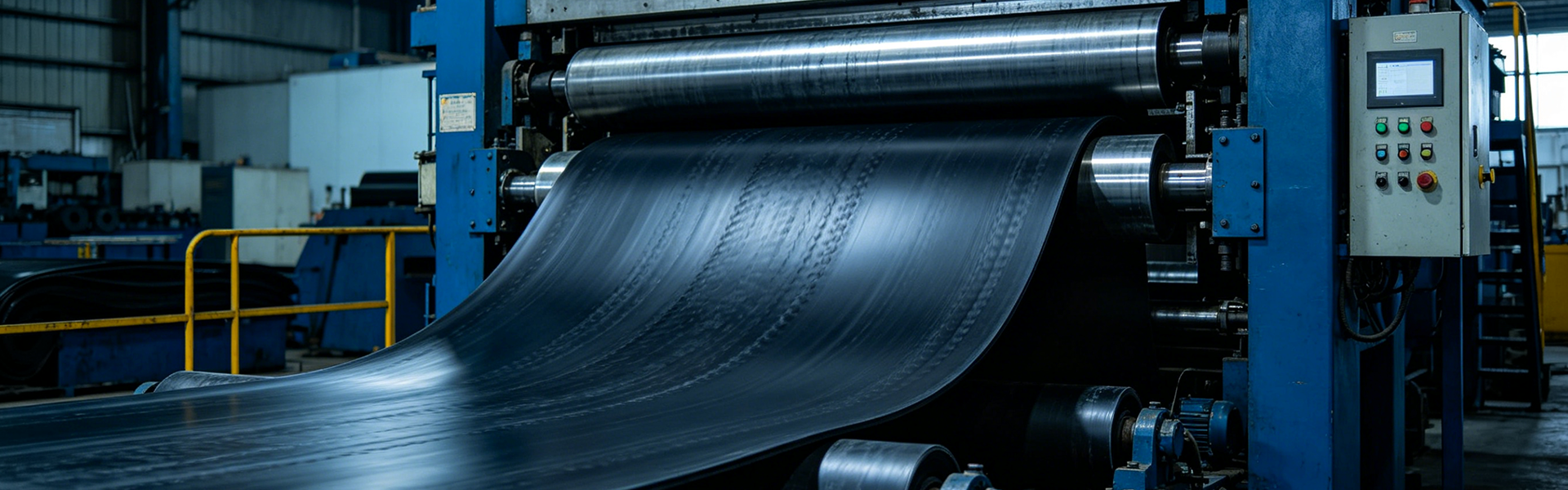
Zinc Oxide for Rubber Vulcanization
ZnO is the universal activator in sulfur-cured rubber compounds. Combined with stearic acid it forms the soluble zinc stearate complex that catalyzes the formation of accelerator polysulfides — the rate-determining step of sulfur crosslinking. Used in tires, conveyor belts, footwear, hoses, and industrial rubber goods.
Why Zinc Oxide for This Application
Function-by-function breakdown of how ZnO contributes to the final formulation.
- Activator Complex Formation — ZnO reacts with stearic acid in situ to form soluble zinc stearate that solubilizes the sulfur accelerator, generating active polysulfide species that crosslink the polymer chain.
- Cure Rate Acceleration — Without ZnO, sulfur cure is impractically slow at standard cure temperatures (140–160 °C). With proper ZnO activation, cure time drops 5–10×, enabling commercial production cycles.
- Network Density Control — ZnO dosage indirectly tunes crosslink density — under-dosed compounds undercure (low modulus, poor heat aging), over-dosed compounds may bloom and waste cost.
- Heat & Aging Resistance Contribution — Beyond cure activation, ZnO contributes to thermal stability and acts as a mild HCl scavenger in chloroprene and halobutyl systems, extending shelf life.
Recommended Grade & Dosage
Pair the right purity tier and surface treatment with the production process.
Rubber Grade Zinc Oxide
≥99.7% ZnO with controlled D50 (0.3–0.6 μm) and low sieve residue. Pb ≤30 ppm meets REACH requirements for tire and conveyor belt OEM specs.
| Parameter | Value |
|---|---|
| Standard Dosage | 3 – 5 phr (parts per hundred rubber) |
| Active ZnO Option | 1.5 – 2 phr (BET 30–60 m²/g — cuts dosage 30–50%) |
| Co-Activator | Stearic acid 1 – 2 phr (essential for solubilization) |
| Compatible Polymers | NR, IR, SBR, BR, NBR, EPDM, IIR, CR |
Formulation & Process Notes
Working parameters and process control points from production experience.
| Parameter | Value |
|---|---|
| Cure Temperature | 140 – 180 °C (compound-dependent) |
| Mixing Order | Add ZnO + stearic acid in masterbatch stage; never alongside sulfur (premature scorch risk) |
| Mill Mixing Time | 2 – 4 min after ZnO addition before fine cure pack |
| Dispersion Target | <3 vol% agglomerates >5 μm in cured part |
| Common Co-Additives | MBT, MBTS, CBS, TBBS accelerators; sulfur 0.5 – 3 phr |
| Storage | Sealed bag, <30 °C, RH <70% — ZnO slowly absorbs atmospheric CO₂ |
Frequently Asked Questions
+Why is stearic acid essential alongside ZnO?
ZnO alone is insoluble in rubber; stearic acid reacts with ZnO at mixing temperature to form zinc stearate, which is soluble in the polymer matrix. Soluble zinc is what activates the accelerator. Without stearic acid, ZnO acts only as an inert filler and cure is essentially the same as no activator.
+Can ZnO dosage be reduced under environmental pressure?
Yes — active ZnO (BET 30–60 m²/g) replaces standard ZnO at roughly 1:2 ratio while delivering the same activator level. EU and California regulations are increasingly restricting Zn discharge into wastewater, so dosage reduction is a strategic priority. The active grade cuts loading 30–50%, drops effluent Zn proportionally, and is cost-neutral or saves money in high-loading formulas.
+Does ZnO contribute to rubber discoloration or blooming?
Standard ZnO at 5+ phr can cause whitish bloom on dark or black rubber after aging. Active ZnO at lower loading dramatically reduces blooming. For light-colored compounds (white shoe soles, transparent goods), surface-treated or active grade is recommended.
+What is the difference between rubber-grade and ceramic-grade ZnO?
Rubber grade has controlled D50 (0.3–0.6 μm) and low Pb (≤30 ppm) but is not optimized for sintering. Ceramic grade has tighter particle distribution for predictable shrinkage during firing. Using ceramic grade in rubber wastes premium price; using rubber grade in ceramic causes inconsistent firing density.