
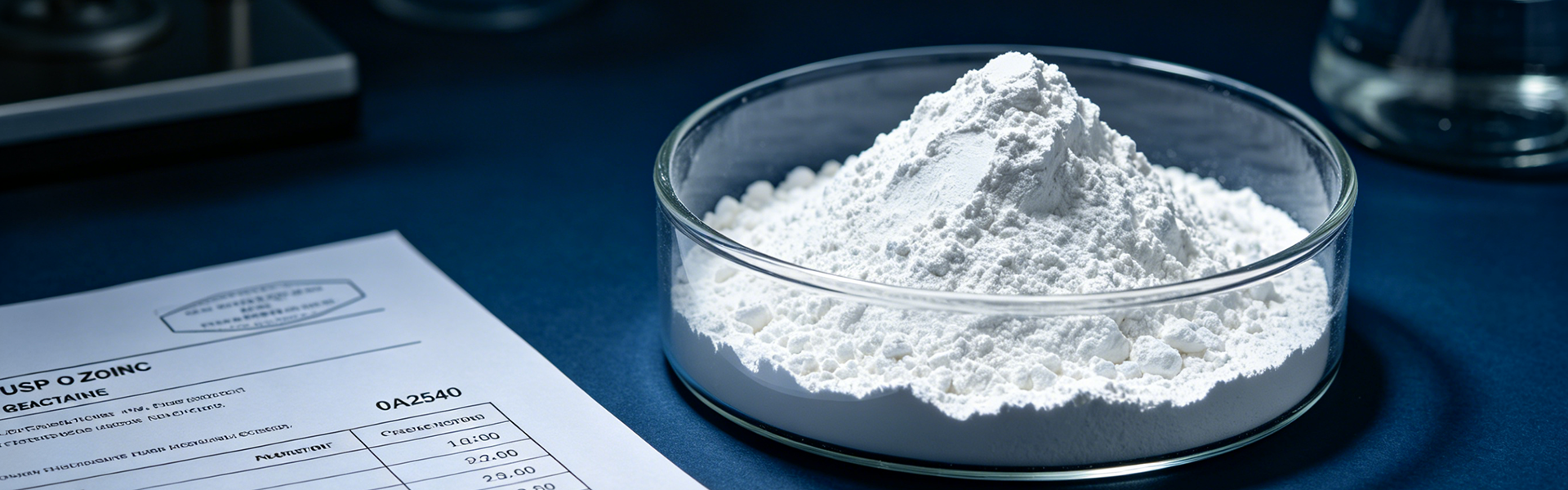
Zinc Oxide in Topical Pharmaceutical Formulations
ZnO is a workhorse active in skin-applied pharmaceuticals: calamine lotion (anti-itch, drying), diaper rash barrier creams (skin protection + mild antimicrobial), antifungal/anti-eczema ointments, and burn/wound dressings. Pharma-grade ZnO meeting USP, EP, or JP monographs is the regulatory baseline for any product filed as OTC drug or registered medical device.
Why Zinc Oxide for This Application
Function-by-function breakdown of how ZnO contributes to the final formulation.
- Skin Barrier & Astringent Action — ZnO forms a physical barrier on skin, blocking irritants and locking in moisture. Mild astringent effect (tightening) calms inflammation and reduces weeping in oozing dermatitis.
- Mild Antimicrobial Activity — Active against Candida albicans, common dermatophytes, and gram-positive bacteria at the loading typical in pharma formulations. Reduces the need for additional synthetic antimicrobials in barrier creams.
- UV Barrier Bonus — Even at non-sunscreen loading (10–15 wt%), ZnO provides incidental UV protection useful in photodermatosis treatment and post-procedure skin care.
- Hypoallergenic & Pediatric-Safe — Decades of safety data in baby/diaper products. Not absorbed transdermally at meaningful levels in intact skin. Suitable for sensitive skin, newborns, and post-surgical sites.
Recommended Grade & Dosage
Pair the right purity tier and surface treatment with the production process.
Pharmaceutical Grade Zinc Oxide
USP / EP / JP-compliant ZnO with full pharmacopoeia testing: heavy metals (Pb ≤50 ppm USP), microbial limits (TAMC ≤10² CFU/g), absence of E. coli / S. aureus / P. aeruginosa in 1 g. Lot-by-lot CoA traceable to indirect-process manufacturing.
| Parameter | Value |
|---|---|
| Calamine Lotion | 8 – 15 wt% (paired with iron oxide for pink color) |
| Diaper Rash Barrier Cream | 10 – 40 wt% |
| Antifungal / Anti-eczema Ointment | 5 – 20 wt% (combined with active antifungal) |
| Burn / Wound Dressing | 5 – 20 wt% in petrolatum / lanolin base |
Formulation & Process Notes
Working parameters and process control points from production experience.
| Parameter | Value |
|---|---|
| Standard Particle Size | D50 1 – 3 μm for typical pharma; finer D50 0.5–1 μm for high-coverage barrier |
| Vehicle Choice | Petrolatum / lanolin for barrier creams; calamine uses water/glycerin lotion base |
| Dispersion | Pre-disperse in oil phase or hydrophilic vehicle with planetary mixer to avoid grit on skin |
pH
ZnO is stable pH 5.5 – 8. Avoid acidic preservative systems that slowly dissolve ZnO
| Parameter | Value |
|---|---|
| Preservation | ZnO provides mild antimicrobial action; standard cosmetic preservatives still recommended |
| Packaging Considerations | ZnO can interact with aluminum tube interior — use epoxy-lined tubes or alternative packaging |
Frequently Asked Questions
+Which pharmacopoeia should our product file under?
Depends on target market. USP (US), EP (Europe), JP (Japan), ChP (China). Most modern filings target tri-pharmacopoeia (USP+EP+JP) compliance for global commercial reach. SEMITECH pharma grade ships with default USP CoA; EP and JP method results available on prior request, including a consolidated tri-pharmacopoeia CoA suitable for global submissions.
+Why microbial limit testing for ZnO?
ZnO is a finely divided powder used in skin-contact products. Microbial contamination during production could be transferred into finished pharmaceutical product. USP / EP both specify microbial limits (TAMC ≤10² CFU/g, no specified pathogens in 1 g). SEMITECH tests each lot to these limits with a microbiology CoA appendix.
+Can ZnO be substituted by zinc carbonate or zinc stearate?
Not in pharmaceutical topical products without re-registration. Zinc carbonate has different bioavailability and dissolution; zinc stearate is a slippery powder lubricant unsuitable for skin contact at high loading. Pharmacopoeia monographs specify ZnO specifically; substitution requires regulatory amendment.
+What is the typical retest interval?
60 months from manufacture date when stored in original sealed packaging at <30 °C and RH <70%. ZnO is chemically stable but absorbs atmospheric CO₂ slowly over time, gradually raising loss-on-ignition (LOI). Test for LOI as primary degradation indicator.